
Important Information about how Inflammation Effects Brain Health
Inflammation is a normal part of your body’s healing cycle. The process of white blood cells rushing into an area of skin can be seen as redness, swelling, or bruising, and it is to be entirely expected after receiving an injury.
However, what happens when inflammation doesn’t seem to go away? When the bruises and swelled skin persist unchecked for years on end? At this point, your body’s inflammation may not be so natural.
Ongoing (chronic) inflammation, when the inflammatory process doesn’t shut down, can cause a variety of health issues. The condition has been linked to damage in brain tissue and neurons and is commonly found in those with Parkinson’s, Alzheimer’s, and multiple sclerosis.
Let’s look at some common ways you can combat chronic inflammation.
Eating More Healthy Foods

Healthy Fats
Omega 3 fatty acids play a part in the inflammation process. Additionally, they can assist in diminishing inflation-related pain.
Here is a list of the top foods that contain high levels of Omega 3:
- Tuna
- salmon
- mackerel
- walnuts
- ground flaxseed
- pecans
- soy
Reducing Processed Foods
If you’ve grown up eating processed foods (cereals with lots of sugar, cured meats, and deep-fried dishes), it can be hard to cut them off cold turkey. Try taking it one step at a time.
Using an air fryer is an easy way to reduce the oil found in some of your favorite processed foods (while not removing them from your diet completely).
Certain foods like brown rice, fruit instead of sugary desserts, and uncured bacon, can also help decrease inflammation. Additionally, drinks such as unsweetened tea, coffee, sparkling water, and infused water are great for fighting inflammation.
More Fruits and Vegetables
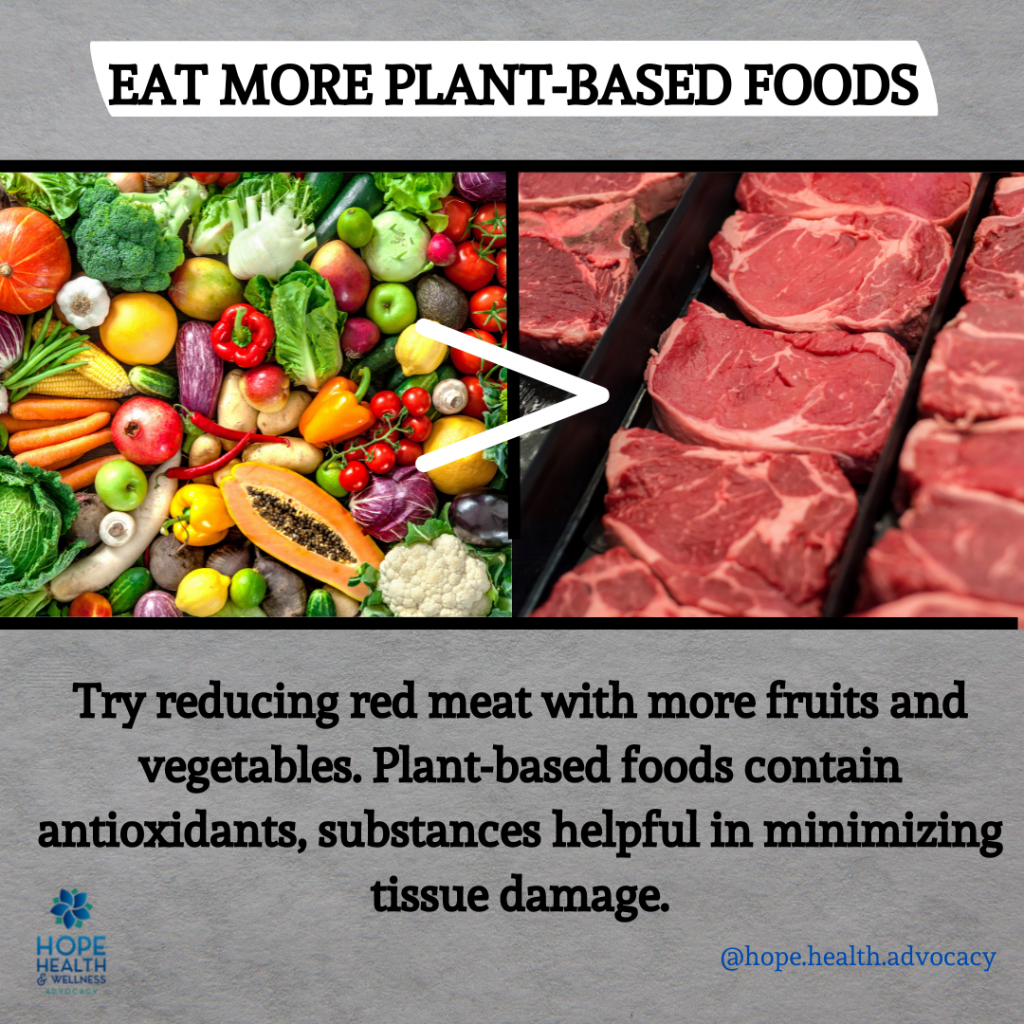
Lots of plant-based foods contain antioxidants, which are helpful in the process of reducing and eliminating tissue damage.
Some common fruits and vegetables high in antioxidants include berries, beets, avocados, pomegranates, and leafy greens.
You can also try consuming other plant-based items like green tea, ginger, whole grains, and legumes.
Reducing Red Meat
Just like with processed foods, you don’t need to remove red meats from your diet entirely. In fact, some red meats can be pro-inflammatory!
However, if you’re looking to reduce inflammation, it may be best to try to cut back on most red meat and replace it with substitutes like fish and beef or nuts and soy-based protein.
Changing Your Routine
Aside from adjusting your diet, adding the following into your day-to-day cycle can help change levels of inflammation:
Exercise
Participating in moderate exercise every day for about 20 minutes can aid in reducing inflammation. Brisk walks are an easy form of exercise you can try during these minutes.
Reduce Stress
When stressed, your body disperses pro-inflammatory cytokines. Therefore, it’s important to try to decrease stress as much as possible.
Some helpful tactics you may attempt if you don’t already have methods of eliminating stress include tai chi and meditation.
Sleep an Appropriate Amount of Time
Never underestimate the power of sleep! Studies have shown that those who sleep for the recommended amount of time each night (7-9 hours for adults), experience less inflammation than those who do not. Thereby, try your best to get some quality rest every night.
Quit Smoking
Cigarettes and nicotine work to suppress the anti-inflammation processes and can inflame the body. Cutting them out of your routine is important.
References
https://www.thorne.com/take-5-daily/article/how-inflammation-impacts-brain-health